
Bipolar and Lying: What’s Really Going On?

Medically reviewed by Laura Athey Updated Date: April 16, 2026

When a loved one behaves in ways that feel deceptive, it shatters the foundation of trust. In the world of mental health, few topics are as polarizing or as painful as bipolar disorder and lying.
Whether you are the person living with the diagnosis or a partner feeling betrayed, you likely have the same burning question: Can bipolar disorder cause lying?
It is a sensitive question that carries a massive emotional weight. For the person with bipolar disorder, the accusation of being a “liar” adds a layer of shame to an already heavy burden.
For the family member, “reddit-style” anecdotes about bipolar and lying reddit threads often paint a bleak picture of manipulation and heartbreak.
As a physician, I want to clarify one thing immediately: Bipolar disorder does not cause lying, but certain symptoms can lead to behaviors that look like dishonesty. Lying is not a diagnostic symptom found in the DSM-5.
However, the neurological storms of mania and the deep shame of depression can impair judgment, memory, and impulse control. Understanding the “why” behind these behaviors is the first step toward healing and accountability.
Can Bipolar Disorder Cause Lying? (Clinical Explanation)
To understand the relationship between bipolar and lying, we must look at the brain’s executive functions. In a healthy state, the prefrontal cortex—the “CEO” of the brain—filters our impulses. It helps us weigh the consequences of our words. During a bipolar episode, this CEO goes on vacation.
The Impact of Impulsivity
During a manic or hypomanic episode, a person experiences extreme impulsivity. They may say things before they can process the truth.
This isn’t necessarily a calculated plot to deceive; it is often a “flight of ideas” where the person believes what they are saying in the moment, even if it contradicts reality five minutes later.
Poor Judgment and Grandiosity
Can bipolar disorder cause lying? In the context of grandiosity, yes. A manic individual might exaggerate their bank account, their job titles, or their connections.
This is a symptom of an inflated ego (grandiosity), a hallmark of mania. They aren’t lying to “get away” with something; they are reporting a distorted reality that their brain currently perceives as true.
Shame and Fear in Depression
Conversely, during a depressive episode, lying often stems from a place of deep survival. If a person is too depressed to shower or go to work, they might lie and say they have the flu.
This is a “shame-based concealment.” They are terrified of being judged for a disability they cannot control, so they use a socially acceptable lie to protect themselves.
Memory Gaps and “Blackouts”
In severe cases, particularly involving psychosis or rapid cycling, individuals may have genuine memory gaps. When asked what they did during a manic weekend, they might “fill in the blanks” (confabulation) to make sense of their world.
To the observer, this looks like a lie. To the patient, it is an attempt to reconstruct a fractured timeline.
Bipolar Disorder vs. Personality & Conduct Disorders
It is vital to distinguish between a mood disorder (Bipolar) and conditions where social deviance is a primary symptom.
We often see confusion in search intent regarding which disorder is more common in males than females and shows up in social behaviors like lying, theft, and aggression.
Featured Snippet Answer: Conduct disorder—not bipolar disorder—is the condition most associated with chronic lying, theft, violence, and vandalism.
While bipolar disorder is a mood disorder characterized by emotional shifts, conduct disorder is a behavioral disorder usually diagnosed in childhood or adolescence.
The Critical Contrast
Many people ask, “Can bipolar be manipulative?” While any human can be manipulative, manipulation is not a core feature of bipolar disorder. If a person consistently uses lying, theft, or aggression as a tool for personal gain without remorse, a clinician might look toward:
- Conduct Disorder: Primarily seen in younger males; involves a repetitive pattern of violating the basic rights of others.
- Antisocial Personality Disorder (ASPD): Often the adult progression of conduct disorder, characterized by a long-term pattern of manipulating or exploiting others.
- Bipolar Disorder: A cyclical mood disorder. The “bad behavior” is usually limited to the episode. When the person is stable (euthymic), they typically return to their baseline moral values and often feel immense guilt for their actions during mania.
Bipolar and Lying vs. Manipulation: What’s the Difference?
When discussing bipolar and lying and manipulation, we have to look at intent. In clinical psychology, true manipulation is a calculated, strategic move to control another person. In bipolar disorder, what looks like manipulation is often a “survival behavior” or a byproduct of emotional dysregulation.
Symptom-Driven vs. Manipulative Behavior
| Feature | Symptom-Driven (Bipolar) | Manipulative Behavior (Calculated) |
| Intent | Driven by mood, fear, or impulsivity. | Driven by a desire for control or gain. |
| Consistency | Occurs mostly during episodes. | Persistent across all mood states. |
| Response to Truth | Often met with confusion or deep shame. | Often met with “gaslighting” or further lies. |
| Remorse | High levels of guilt once stable. | Low to no genuine remorse. |
If a person with bipolar disorder lies about spending money during mania, it is usually because their brain’s reward system is malfunctioning. They are chasing a dopamine hit, not trying to hurt their partner. This doesn’t make the lie “okay,” but it changes how we approach the solution.
Bipolar Disorder, Infidelity, and Truthfulness
One of the most devastating aspects of bipolar and lying infidelity is the double betrayal. During a manic episode, hypersexuality is a common and clinical symptom. The brain is flooded with chemicals that scream for gratification, overriding the person’s moral compass and long-term commitments.
Why the Lying Happens After
The lying usually starts after the episode begins to fade. As the person “comes down” from mania, they are hit with the “bipolar crash.” The realization of what they have done—the infidelity—is so crushing that they may lie to conceal it.
This concealment is rarely about a lack of love for the partner. Instead, it is a desperate attempt to avoid the consequences of a behavior they don’t even recognize as their own.
As an MD, I emphasize: Infidelity is not a symptom of bipolar, but hypersexuality and poor impulse control are. This distinction is key for couples therapy. It allows the couple to hate the disease while working on the relationship’s accountability.
Bipolar and Extreme Falsehoods (Including Medical Lies)

In rare and severe cases, a person might engage in bipolar and lying about cancer or other major life events. This is often where the line between “lying” and “psychosis” blurs.
Grandiosity and Delusions
During a “Great Height” manic episode, a person may experience delusions of grandeur. They might truly believe they have a terminal illness that gives them special powers, or they might invent a medical crisis to explain their erratic behavior to themselves.
Factitious-Like Behaviors
While not the same as Factitious Disorder (Munchausen’s), a bipolar individual in a mixed state might use medical lies to garner the support and attention they desperately need but don’t know how to ask for.
While not the same as Factitious Disorder (Munchausen’s), individuals with bipolar disorder in a mixed state may resort to medical lies to seek emotional support and attention they find difficult to express directly.
What Triggers Bipolar Episodes? (And Why Behavior Changes)
Understanding what triggers bipolar episodes is essential for understanding why a person’s honesty and personality seem to shift overnight. Bipolar disorder is not a constant state; it is reactive. When a “trigger” hits, the brain’s ability to regulate mood and truthfulness is compromised.
Common Behavioral Triggers:
- Sleep Deprivation: This is the #1 trigger for mania. A single “all-nighter” can cause a chemical shift that leads to impulsive talking and unintentional lying.
- Substance Use: Alcohol and drugs act like gasoline on a fire. They worsen impulsivity and make bipolar and lying much more frequent as the person hides their usage.
- High Stress and Trauma: Major life changes (even positive ones like a promotion) can trigger “anxious distress,” leading to avoidance-based lying.
- Seasonal Changes: Many patients experience “Seasonal Affective Disorder” components, where spring triggers mania and autumn triggers depressive concealment.
Bipolar I vs. Bipolar II: Does It Matter for Behavior?
When assessing the likelihood of behavioral shifts, we have to ask: What Is the Difference Between Bipolar 1 and 2? The subtype significantly influences how a person interacts with the truth and their loved ones.
Bipolar I: High Mania and Psychosis
In Bipolar I, the mania is “full-blown.” This is where we see the most extreme cases of grandiosity and “medical lies.” Because psychosis (losing touch with reality) is possible in Bipolar I, the person may not even be aware they are being untruthful. Their “lies” are, to them, their current reality.
Bipolar II: Hypomania and Chronic Depression
In bipolar 2 depression and anxiety, the “highs” are less intense (hypomania). The deception here is often more subtle. It usually involves “omission”—leaving out details about spending or social interactions because they feel “high” and don’t want anyone to ruin their mood.
However, the majority of the lying in Bipolar II happens during the long depressive phases as a way to hide their inability to function.
| Feature | Bipolar I | Bipolar II |
| Mania Severity | High (Can require hospitalization) | Moderate (Hypomania) |
| Psychosis Risk | Significant | Rare |
| Type of Deception | Grandiose, delusional, “big” lies | Shame-based, avoidance, “small” lies |
| Insight | Often very low during episodes | Higher, but clouded by mood |
“Can Someone With Bipolar Ever Be Normal?”
This is a heartbreaking question I often hear from newly diagnosed patients. Can someone with bipolar ever be normal? The answer depends on how you define “normal.”
If “normal” means never having a mood swing again, that may be unrealistic. However, if “normal” means being stable, reliable, honest, and high-functioning, the answer is a resounding yes.
From “Normal” to “Stable”
In medicine, we prefer the term “euthymia”—a stable, baseline mood state. When a person is euthymic:
- Their moral compass is intact.
- They can maintain healthy, honest relationships.
- They can hold steady employment.
- They are no more likely to lie than someone without the disorder.
Recovery isn’t just about the absence of symptoms; it’s about the presence of “insight.” A stable person with bipolar disorder knows their triggers and has the “normal” ability to say, “I’m feeling a bit manic, I need to check in with my doctor.”
Do People With Bipolar Know When They’re Lying?
The question of bipolar and lying eventually leads to the concept of “insight.” In psychiatry, we call this anosognosia—a condition where a person is physically unable to recognize that they are ill or that their behavior is abnormal.
- During Mania: Insight is often zero. The person believes they are a genius, a millionaire, or perfectly fine. In this state, they don’t believe they are “lying”; they believe they are stating facts.
- During Depression: Insight is usually very high, but it is accompanied by paralyzing guilt. They know they are lying about “feeling sick” to avoid a party, but the emotional pain of the truth feels too heavy to share.
- During Stability: This is when the “truth” comes out. Most people with bipolar feel immense remorse once an episode clears and they realize the trail of deception they left behind.
Self-Assessment: Could You Have Bipolar Disorder?
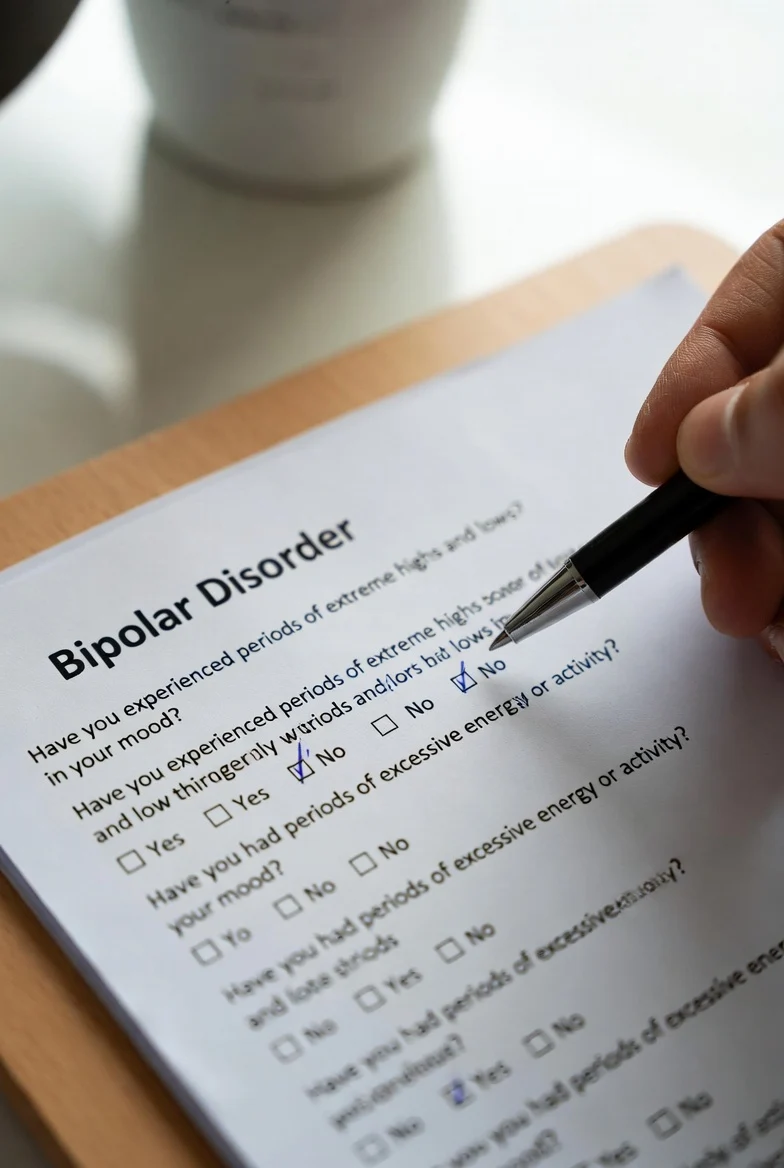
If you are reading this because you are worried about your own behavior, it is important to look at the patterns. Could You Have Bipolar Disorder? Key Symptoms to Watch For involve more than just “lying” or “moodiness.”
When to Seek a Professional Evaluation:
- The “Up” Cycles: Have you ever gone days with little sleep, felt like your thoughts were racing, and made impulsive decisions (spending, sex, or travel)?
- The “Down” Cycles: Do you experience weeks of “heavy” depression where you can’t get out of bed and find yourself lying to friends to avoid being seen?
- The “Crash”: Do you feel a deep sense of shame after a period of high energy?
Signs of Bipolar Disorder: When Should You Take a Self-Test?
If these cycles interfere with your job or your marriage, it’s time. You can take a Mood Disorder Questionnaire (MDQ) online as a “screening tool,” but remember: a self-test is not a diagnosis. It is a conversation starter for you and your MD.
Reddit Perspectives: What Bipolar and Lying Looks Like in Real Life
If you browse bipolar and lying reddit threads, you will see a lot of pain. You’ll find partners of “bipolar liars” and people with bipolar begging for ways to stop their impulsive mouth.
What we can learn from these communities:
- Validation: You are not alone in this struggle.
- Accountability: The community often reminds members that “The illness is an explanation, but it is not an excuse.”
- Hope: Many threads highlight “success stories” where medication and therapy turned a chaotic, deceptive life into a stable, honest one.
In this final segment, we move into the neurological nuances that can complicate a diagnosis, provide the framework for setting healthy boundaries, and conclude with the clinical “Closing Note” and FAQ.
Medical Sidebar: What Are Low-Lying Cerebellar Tonsils?
In your research of neurological or psychiatric symptoms, you may have come across the term What Are Low-Lying Cerebellar Tonsils? It is important to clarify this immediately: this is a neurological structural finding, not a psychiatric disorder.
Low-lying cerebellar tonsils (often associated with a Chiari Malformation) occur when the lower part of the brain pushes down through the opening at the base of the skull.
While this can cause headaches, dizziness, or neck pain, it does not cause bipolar disorder or a tendency to lie. If a doctor mentions this after a scan, they are looking at the “hardware” of your brain, whereas bipolar disorder is primarily an issue with the “software” (neurochemistry).
Setting Boundaries Without Blame
If you are dealing with a bipolar person who is currently struggling with truthfulness, you need a strategy. You cannot “fix” their brain chemistry, but you can protect your own mental health.
The “MD-Approved” Boundary Framework:
- Detach with Love: Recognize that the “lie” is a symptom of the episode, not a personal attack on you. This reduces the heat in the room.
- The “No-Discussion” Rule: If they are in the middle of a manic episode and telling grandiose stories, don’t argue with the lie. Simply say, “I can see you’re feeling very high right now. Let’s talk about this when things are more stable.”
- Require Accountability: Once the episode passes (euthymia), have the hard conversation. “I know the mania made you feel like you had that money, but the bank account is empty. We need to see your doctor to adjust your meds.”
Frequently Asked Questions (FAQ)
Does bipolar disorder make people lie?
Directly, no. However, it creates conditions—like impulsivity, grandiosity, and crushing shame—that make lying a common “symptom-driven” behavior. Once the mood is stabilized with medication, the lying typically stops.
Is manipulation part of bipolar disorder?
Manipulation is generally a calculated personality trait. In bipolar disorder, “manipulative” actions are usually desperate attempts to manage a mood swing or hide a mistake made during an episode. It is a reaction to the illness, not a core part of the person’s identity.
Can bipolar cause false accusations?
Yes. During a bipolar anxiety depression episode or a “mixed state,” paranoia can set in. The person may truly believe you are cheating, stealing, or plotting against them. These are “delusions of persecution,” not intentional lies.
How do you set boundaries without blame?
Focus on the behavior and the consequence, not the character. Instead of “You are a liar,” try “I cannot trust the information I’m getting right now, so I will be managing the finances until your mood stabilizes.”
Conclusion: Compassion + Accountability
Navigating the world of bipolar and lying is one of the hardest challenges a family can face. As we have explored, the answer to “Can bipolar disorder cause lying?” is complex. It isn’t a “yes” or “no”—it is a “how.”
Bipolar disorder is a powerful illness that can temporarily hijack a person’s values. But it is also a highly treatable condition. With the right combination of mood stabilizer drugs, therapy, and lifestyle changes, the “liar” can become the stable, honest partner they were always meant to be.
If you are struggling today, remember: The illness is an explanation, but it is not an excuse to stop treatment. Stability is possible, and truth is the first step toward recovery.
Authoritative Clinical References
- National Institute of Mental Health (NIMH) – Bipolar Disorder
- Substance Abuse and Mental Health Services Administration (SAMHSA)
- National Center for Biotechnology Information (NCBI) – PubMed Central
- Mayo Clinic – Bipolar Disorder: Symptoms and Causes
- NAMI (National Alliance on Mental Illness) – Managing Bipolar Disorder

Related Posts






Subscribe to Our Newsletter
Get mental health tips, updates, and resources delivered to your inbox.
MORE from Author
Read More Watching someone you care about struggle with bipolar depression and anxiety can be heartbreaking. You may notice that they withdraw…
 In my practice as a clinical psychologist, I often observe that the difference between a patient who crumbles under pressure…
 We all have "up" days and "down" days. Perhaps you feel energized after a promotion or sluggish on a rainy…
 To define bipolar disorder accurately, we must look at it as a chronic mood dysregulation condition. In psychology and medicine,…
Are you looking for a Therapist?
Connect with qualified mental health professionals who understand
bipolar disorder, mood changes, and emotional challenges.
Private • Supportive • Confidential